Concert Archive
BROADFORD, VICTORIA
Sunday 12 November 2017
4:00 pm
Music For a King
in the court of Frederick the Great
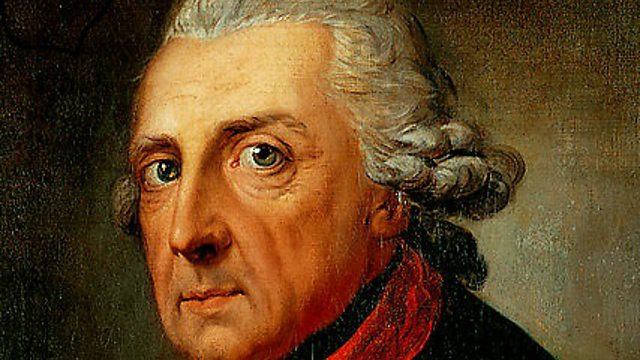
Elegant music by Frederick the Great, J.J. Quantz,
F. Benda, J.S. Bach and C.P.E Bach.
Salon Concerts at Broadford
700 Three Chain Road, Broadford, Vic 3658
Greg Dikmans playing his sonorous "Quantz" flute
with Peter Hagen (harpsichord).
LISTEN to the sound of a “Quantz” flute
No other statesman of his time did so much to promote music at court than Frederick the Great. During his years in Ruppin and Rheinsberg as Crown Prince, Frederick had already assembled a small chamber orchestra. The cultural life at the Prussian court was to receive an entirely new significance after Frederick’s accession to the throne in Berlin in 1740. Within a short time, Berlin’s musical life began to flower thanks to the young king’s decision to construct an opera house and to engage outstanding instrumentalists, singers and conductors.
As a compensation for the demanding affairs of state, the Prussian king enjoyed playing the flute and composed above all for this instrument, in a style closely following that of his teacher Johann Joachim Quantz. Quantz called this the mixed style, one that combined the German style with the best elements of the Italian and French national styles. It can also be characterised as galant: ‘Being galant, in general’, wrote Voltaire, ‘means seeking to please’. Galant music displays aesthetic ideals such as clarity, agreeableness and naturalness.
“Music For a King” celebrates a time and place that we now can only imagine. Join us to come closer to this once exquisite reality.
Music for a Prussian King
Friday 23 September 2016 — 6:00pm
Salon, Melbourne Recital Centre
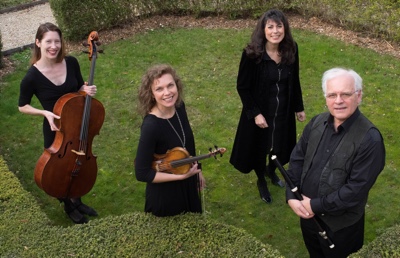
Hear Lucinda Moon (violin) Greg Dikmans (flute) perform with Accademia Arcadia – Josephine Vains (cello) and Jacqueline Ogeil (piano) – in a program of works by CPE Bach, Quantz and Benda written for the music-loving flute-playing Frederick the Great.
Frederick’s court boasted numerous pianos, all designed after the Cristofori model, and his court paused for an hour daily to listen to the monarch perform on the flute with the accompaniment of piano and/or other instruments. Hear Australia’s only copy of the original Cristofori piano c1730 used as a continuo instrument, and a composition by the King himself.
Greg will be playing his beloved ‘Quantz’ flute, a copy of an instrument made by Quantz c.1740.
- Music for a Prussian King
- Frederick II
Sonata in E minor for flute and cembalo - Johann Joachim Quantz
Sonata in E minor for flute, violin and cembalo (QV 2/21) - Franz Benda
Sonata per il Violino Solo et Cembalo col Violoncello in G major - C.P.E. Bach
Sonata in A minor for flute, violin and bass (Wq 148)
MELBOURNE
Sunday 16 August 2015 – 3:00 pm
Mozart Flute Quartets
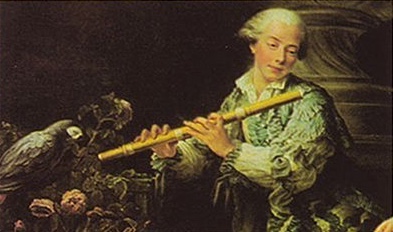
Wyselaskie Auditorium
Centre for Theology & Ministry — 29 College Crescent, Parkville, Victoria, 3052
Greg Dikmans (flute) and Lucinda Moon (violin) with Heather Lloyd (viola) and Hilary Kleinig (cello)
The Elysium Ensemble has been critically acclaimed for its performances of the Haydn Divertimenti for flute, violin and cello.
In this program they perform one of the finest collections of quartets for flute and strings from the Classical period.
Experience the supple tones and dynamics of period instruments in the Wyselaskie Auditorium which was once a chapel and has a rich, resonant acoustic.
“The passages in octaves between flute and violin were beautifully in tune reflecting the long-term musical relationship between Dikmans and Moon. The playing was always full of gesture assisting to get the musical story across … performed with exquisite refinement and dedication to the classical aesthetics.”
ADELAIDE
Friday 14 August 2015 – 7:30 pm
Mozart Flute Quartets
2015 Elder Perspectives Series
Elder Hall — The University of Adelaide, SA 5005
Greg Dikmans (flute) and Lucinda Moon (violin) with Heather Lloyd (viola) and Hilary Kleinig (cello)
The Elysium Ensemble returns to Elder Hall after its critically acclaimed performance of Haydn Divertimenti in the 2014 Perspective Series with a concert of one of the finest collections of quartets for flute and strings from the Classical period.
Experience the supple tones and dynamics of period instruments in a splendid setting with beautiful acoustics.
Sunday 2 August 2015 – 4:00 pm
Dresden and Drama
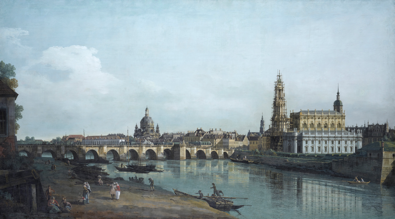
Broadford Salon Concert Series
700 Three Chain Road, Broadford VIC 3658
Greg Dikmans (flute & recorder) and Lucinda Moon (violin) with Peter Hagen (harpsichord)
Veracini, Pisendel and Quantz are performed by the Elysium Ensemble joined here for the first time by Peter Hagen. Full blooded virtuosic music by composers who dedicated their music to Kings and worked in the great courts of Europe is contrasted with moments of refined elegance.
The influence of the Italians upon the musical scene in Dresden is highlighted in this programme of stunning music. The full texture of the violin is explored with much double stopping and fiery displays of rapidity, while the refined and delicate sound of the baroque flute is extended into rapid passagi and extraordinary virtuosic displays.
Sunday 28 September 2014 – 3:00 pm
Parisian Soirée
Greg Dikmans (flute), Lucinda Moon (violin), Hilary Kleinig (cello) & Glenys March (harpsichord)
Ngeringa Arts Concerts Series (Mt Barker, SA)
Venue: Living Arts Centre at the Mt Barker Waldorf School, Sims Road, Mt Barker, SA
Works by Georg Philipp Telemann (1681–1767), Joseph Bodin de Boismortier (1689–1755), Louis-Antoine Dornel (c. 1680-after 1756) and André Chéron (1695-1766).
Performed on period instruments.
Telemann made a triumphant visit to Paris in 1737. He was at the height of his fame in Germany, but still lacked international recognition and to achieve that he had to succeed in Paris. For this visit he composed his justly famous Paris Quartets. He realised his music had to adapt itself to the taste of the Paris salons and concerts, as well as flatter the musicians who performed it and provide enough originality to keep the interest of the quickly satiated society. With these Nouveuax Quatuors Telemann not only fulfilled these aims, but also produced some of the finest chamber music written in Europe in the first half of the 18th century.
Telemann’s Paris Quartet in D major will be complemented with works by celebrated French musicians of the time.
Sunday 21 September 2014 – 3:00 pm
Dialogue: The Art of Elegant Conversation
Greg Dikmans (flutes) & Lucinda Moon (violin & viola d’amore)
Wyselaskie Auditorium
Centre for Theology & Ministry — 29 College Crescent, Parkville, Victoria, 3052
3 Flutes — 3 Pitches — 3 Sound Worlds
Experience the supple tones and dynamics of period instruments in an intimate setting with beautiful acoustics.
Greg and Lucinda explore the rich and varied repertoire of the 18th-century instrumental solo without bass and the duo for two melody instruments. Some of the composers are not so well-known today, but in the 18th-century were deservedly considered among the best of their time.
Works by Jacques Hotteterre (1674–1763), Joseph Bodin de Boismortier (1689–1755), Georg Philipp Telemann (1681–1767), Johan Helmich Roman (1694–1758), Johann Joachim Quantz (1697–1773) and Carl Philipp Emanuel Bach (1714–1788).
Saturday 20 September 2014 – 2:30 pm
Dialogue: The Art of Elegant Conversation
Greg Dikmans (flutes) & Lucinda Moon (violin & viola d’amore)
Duneira Concerts
Duneira, Officer Lane, Mount Macedon VIC
Rarely performed works by Johann Joachim Quantz (1697–1773), Joseph Bodin de Boismortier (1689–1755), Carl Philipp Emanuel Bach (1714–1788) and Jacques Hotteterre (1674–1763).
Greg and Lucinda explore the rich and varied repertoire of the 18th-century instrumental solo without bass and the duo for two melody instruments. Some of the composers are not so well-known today, but in the 18th-century were deservedly considered among the best of their time.
Experience the supple tones and dynamics of period instruments in an intimate setting.
Sunday 17 August 2014 – 4:00 pm
Dialogue: The Art of Elegant Conversation
Greg Dikmans (flute) & Lucinda Moon (violin)
Broadford Salon Series (VIC)
Venue: Broadford Salon, 700 Three Chain Road, Broadford, VIC
Rarely performed works by Johann Joachim Quantz (1697–1773), Joseph Bodin de Boismortier (1689–1755), Carl Philipp Emanuel Bach (1714–1788) and Johan Helmich Roman (1694–1758).
Greg and Lucinda explore the rich and varied repertoire of the 18th-century instrumental solo without bass and the duo for two melody instruments. Some of the composers are not so well-known today, but in the 18th-century were deservedly considered among the best of their time.
Saturday 16 August 2014 – 7:00 pm
Dialogue: The Art of Elegant Conversation
Greg Dikmans (flute) & Lucinda Moon (violin)
House Concert (Heidelberg Heights, Melbourne)
Presented by Neighbourhood Productions
Rarely performed works by Johann Joachim Quantz (1697–1773), Joseph Bodin de Boismortier (1689–1755), Carl Philipp Emanuel Bach (1714–1788) and Johan Helmich Roman (1694–1758).
Greg and Lucinda explore the rich and varied repertoire of the 18th-century instrumental solo without bass and the duo for two melody instruments. Some of the composers are not so well-known today, but in the 18th-century were deservedly considered among the best of their time.
Sunday 10 August 2014 – 4:00 pm
Dialogue: The Art of Elegant Conversation
Greg Dikmans (flute) & Lucinda Moon (violin)
Southern Theatre and Arts Supporters (Willunga, SA)
Venue: Waverly Homestead, St. Peter’s Terrace, Willunga, SA
Rarely performed works by Johann Joachim Quantz (1697–1773), Joseph Bodin de Boismortier (1689–1755), Carl Philipp Emanuel Bach (1714–1788) and Johan Helmich Roman (1694–1758).
Greg and Lucinda explore the rich and varied repertoire of the 18th-century instrumental solo without bass and the duo for two melody instruments. Some of the composers are not so well-known today, but in the 18th-century were deservedly considered among the best of their time.
Joseph Haydn: Divertimenti for flute, violin & cello
Greg Dikmans (flute), Lucinda Moon (violin) & Hilary Kleinig (cello)
Elder Perspectives Series (Adelaide, SA)
Date: Sunday 11 May 2014 – 3:00pm
Venue: Elder Hall, North Terrace, Adelaide, SA
The elegance, charm and wit of Haydn's six Divertimenti are brought to life with the supple tones and dynamics of period instruments in an intimate setting.
Haydn’s Six Divertimenti were first published in London in 1784 by William Forster, a dealer and violin maker who purchased more than 120 compositions by Haydn. They are chamber works of quality and charm which bear out fully Haydn’s comment that “in instrumental music my pure musical fantasies are usually given free reign”.
The Divertimento (which in Italian means diversion or amusement), along with the Cassation and Serenade, played an important role in the social and musical life of the middle classes in the second half of the 18th-century, particularly in South Germany and Austria.
Rave Review of Haydn Concert
“Haydn wrote the recipes. Elysium turned them into delectable music.”
“Classicism at its most perfectly formed, and most persuasively performed.”
Music critic Elizabeth Silsbury, writing in The Advertiser, makes some perceptive comments about Haydn’s chamber music and was very appreciative of the ensemble’s approach to performing this music.
Music from the Court of Frederick the Great
Greg Dikmans (baroque flute), Lucinda Moon (baroque violin) and Glenys March (harpsichord).
Rarely performed sonatas by Frederick the Great and Franz Benda, a duet for flute and violin by Johann Joachim Quantz and a trio sonata by Carl Philipp Emanuel Bach.
Friday 26 April 2013 – 1:10pm
Lunchtimes at Elder Hall Concert Series
Elder Hall
Elder Conservatorium of Music
The University of Adelaide
The Art of Elegant Conversation
18th-century solos and duos for flute and violin
Greg Dikmans (baroque flute) and Lucinda Moon (baroque violin)
Exploring the rich and varied repertoire for instrumental solo and duo without bass in rarely performed works by Quantz, Boismortier and Telemann.
Friday 18 January 2013 – 3:00pm
Organs of the Ballarat Goldfields Festival
Christian Fellowship Church
Cnr of Mair and Dawson Streets, Ballarat
2012 CONCERT SERIES — Melbourne Recital Centre

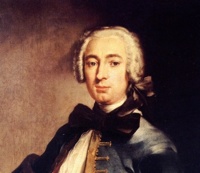
Johann Joachim Quantz
The Elysium Ensemble’s 2012 Concert Series at the Melbourne Recital Centre celebrated the music of Boismortier, Telemann and Quantz, drawing from their cycles of solos and duets. Works by their contemporaries provided an enlightening context.
Greg Dikmans (baroque flute) and Lucinda Moon (baroque violin) have developed a unique artistic dialogue and understanding over a 20 year creative partnership. In this series, Lucinda and Greg were joined by Glenys March (harpsichord) to present rarely heard and newly discovered works from the Baroque era using the performance practices of the time.
Dialogue: The Art of Elegant Conversation
Greg Dikmans and Lucinda Moon explore the rich and varied repertoire of the 18th-century instrumental solo without bass and the duo for two melody instruments.
- DIALOGUE I:
TUESDAY 27 MARCH » - DIALOGUE II:
MONDAY 21 MAY » - DIALOGUE III:
TUESDAY 17 JULY » - DIALOGUE IV:
WEDNESDAY 26 SEPTEMBER » - DIALOGUE V:
MONDAY 12 NOVEMBER »
All concerts start at 7:00pm and are held in the Salon at the Melbourne Recital Centre, which has a crystal clear, resonant acoustic and intimate setting making it ideal for Baroque chamber music.
Tickets $45 ($35 concession)
Series Summary
The complete works for flute and violin
by featured composers
- Joseph Bodin de Boismortier
- Johann Joachim Quantz
and partitas, fantasies and sonatas
for solo flute and solo violin by
- Johann Sebastian Bach
- Johann Georg Pisendel
- Georg Philipp Telemann
- Carl Philipp Emanuel Bach
Other composers in the Series:
- Franz Benda
- Michel Blavet
- André Chéron
- Louis-Antoine Dornel
- Frederick the Great
- Jacques Hotteterre ‘le Romain’
Elysium Ensemble gratefully acknowledges the support of



- The Cameron Family Foundation
- John & Anne Duncan
DIALOGUE I
TUESDAY 27 MARCH – 7:00pm | Salon (Melbourne Recital Centre)
Tickets $45 ($35 concession)
Greg Dikmans (baroque flute) and Lucinda Moon (baroque violin) explore the rich and varied repertoire of the 18th-century instrumental solo without bass and the duo for two melody instruments.
Rarely performed duos by Hotteterre, Boismortier, Blavet and Quantz, and solo Fantasies by Telemann.
Jacques Hotteterre ‘le Romain’ (1674–1763)
Deuxième suite de pièces à deux dessus (Paris, 1717)
Georg Philipp Telemann (1681–1767)
Fantasie for transverse flute without bass (Hamburg, 1732/33)
Fantasie for violin without bass (Hamburg, 1735)
Joseph Bodin de Boismortier (1689–1755)
Sonata II in E minor
VI Sonates pour une flute traversière, et un violon par accords, sans basse (Paris, 1734)
Michel Blavet (1700–1768)
Suite in D major for two melody instruments
Premier Recueil de pièces (1744)
Joseph Bodin de Boismortier (1689–1755)
Sonata V in A major
VI Sonates pour une flute traversière, et un violon par accords, sans basse (Paris, 1734)
Johann Joachim Quantz (1697–1773)
Duetto II in A minor
Sei Duetti a due flauti traversi, op. 2 (Berlin, 1759)
DIALOGUE II
MONDAY 21 MAY – 7:00pm | Salon (Melbourne Recital Centre)
Tickets $45 ($35 concession)
Greg Dikmans (baroque flute) and Lucinda Moon (baroque violin) explore the rich and varied repertoire of the 18th-century instrumental solo without bass and the duo for two melody instruments.
Rarely performed duos by Boismortier and Quantz, and solo Fantasies by Telemann.
Johann Joachim Quantz (1697–1773)
Duetto VI in E minor
Sei Duetti a due flauti traversi, op. 2 (Berlin, 1759)
Georg Philipp Telemann (1681–1767)
Fantasie for transverse flute without bass (Hamburg, 1732/33)
Fantasie for violin without bass (Hamburg, 1735)
Joseph Bodin de Boismortier (1689–1755)
Sonata VI in G minor
VI Sonates pour une flute traversière, et un violon par accords, sans basse (Paris, 1734)
Joseph Bodin de Boismortier (1689–1755)
Sonata III in D major
VI Sonates pour une flute traversière, et un violon par accords, sans basse (Paris, 1734)
Georg Philipp Telemann (1681–1767)
Fantasie for transverse flute without bass (Hamburg, 1732/33)
Fantasie for violin without bass (Hamburg, 1735)
Johann Joachim Quantz (1697–1773)
Duetto I in G major
Sei Duetti a due flauti traversi, op. 2 (Berlin, 1759)
DIALOGUE III
Tribute to Frederick the Great and his court at Potsdam
TUESDAY 17 JULY – 7:00pm | Salon (Melbourne Recital Centre)
Tickets $45 ($35 concession)
Greg Dikmans (baroque flute) and Lucinda Moon (baroque violin) explore the rich and varied repertoire of the 18th-century instrumental solo without bass and the duo for two melody instruments.
Greg and Lucinda will be joined by guest artist Glenys March (harpsichord).
Rarely performed sonatas by Frederick the Great (2012 is the 300th Anniversay of his birth) and Franz Benda, a trio sonata by CPE Bach, a duet by Quantz, a Fantasie by Telemann and the solo flute Sonata in A minor by CPE Bach.
Johann Joachim Quantz (1697–1773)
Duetto III in B minor
Sei Duetti a due flauti traversi, op. 2 (Berlin, 1759)
Frederick the Great (1712–1786)
Sonata for flute and basso continuo
Georg Philipp Telemann (1681–1767)
Fantasie for violin without bass (Hamburg, 1735)
Carl Philipp Emanuel Bach (1714–1788)
Sonata for transverse flute without bass (Berlin, 1763)
Franz Benda (1709–1786)
Sonata for violin and basso continuo
Carl Philipp Emanuel Bach (1714–1788)
Trio Sonata for flute, violin and basso continuo
DIALOGUE IV
WEDNESDAY 26 SEPTEMBER – 7:00pm | Salon (Melbourne Recital Centre)
Tickets $45 ($35 concession)
Greg Dikmans (baroque flute) and Lucinda Moon (baroque violin) explore the rich and varied repertoire of the 18th-century instrumental solo without bass and the duo for two melody instruments.
Rarely performed duos by Quantz and CPE Bach, the solo violin Sonata in A minor by Pisendel, the solo Partita in A minor for flute by JS Bach and a Fantasie by Telemann.
Johann Joachim Quantz (1697–1773)
Duetto IV in C major
Sei Duetti a due flauti traversi, op. 2 (Berlin, 1759)
Johann Georg Pisendel (1687–1755)
Sonata for violin solo without bass
Carl Philipp Emanuel Bach (1714–1788)
Duet in E minor for flute and violin (Hamburg, 1748)
Johann Sebastian Bach (1685–1750)
Partita in A minor for flute without bass (BWV 1013)
Georg Philipp Telemann (1681–1767)
Fantasie for violin without bass (Hamburg, 1735)
Johann Joachim Quantz (1697–1773)
Duetto V in D major
Sei Duetti a due flauti traversi, op. 2 (Berlin, 1759)
DIALOGUE V
Les Goûts-réünis - Perfection in Music
MONDAY 12 NOVEMBER – 7:00pm | Salon (Melbourne Recital Centre)
Tickets $45 ($35 concession)
Greg Dikmans (baroque flute) and Lucinda Moon (baroque violin) explore the rich and varied repertoire of the 18th-century instrumental solo without bass and the duo for two melody instruments.
Greg and Lucinda will be joined by guest artist Glenys March (harpsichord).
Rarely performed duos by Boismortier, sonatas and suite by Dornel and Chéron, and the solo violin Partita in E major by JS Bach.
Joseph Bodin de Boismortier (1689–1755)
Sonata No. I in G major
VI Sonates pour une flute traversière, et un violon par accords, sans basse (Paris, 1734)
Louis-Antoine Dornel (c1680-after 1756)
Sonata for violin and basso continuo
Suite for flute and basso continuo
Sonates a violon seul et suites pour la flûte traversière avec la basse (Paris, 1711)
Johann Sebastian Bach (1685–1750)
Partita III in E major for violin without bass (BWV 1006)
Joseph Bodin de Boismortier (1689–1755)
Sonata No. IV in D minor
VI Sonates pour une flute traversière, et un violon par accords, sans basse (Paris, 1734)
André Chéron (1695-1766)
Sonata VII in D major for flute, violin and basso continuo
Sonates en duo et en trio pour la flûte traversière et le violon avec la basse-continue (Paris, 1729)
Lunchtimes at Elder Hall
Greg Dikmans (baroque flute) and Lucinda Moon (baroque violin)
Friday 3 June 2011 — 1:10pm
Elder Conservatorium of Music
The University of Adelaide
Enquiries:
08 8303 5925
www.elderhall.adelaide.edu.au
Johann Joachim Quantz — Duets
Georg Philipp Telemann — Solo Fantasias
Ngeringa Farm Concert Series 2011
Greg Dikmans (baroque flute) and Lucinda Moon (baroque violin)
Sunday 27 February 2011 — 3:00pm
Concert Room, Ngeringa Farm
Williams Road (off Springs Road), Mt Barker, South Australia
Works by Hotteterre, CPE Bach, Telemann, Blavet, Boismortier and Quantz.
ABC Classic FM — Sunday Live
Greg Dikmans (baroque flute) and Lucinda Moon (baroque violin)
Sunday 21 November 2010 — 3.00pm EST
Live Broadcast from Studio 520
ABC Adelaide
FREE ENTRY
Greg Dikmans (baroque flute) and Lucinda Moon (baroque violin) explore the rich and varied repertoire of the 18th-century instrumental duo. This beautiful program, titled ‘Dialogue: the art of elegant conversation’, includes works by Michel Blavet, Joseph Bodin de Boismortier, Jacques Hotteterre, Johann Joachim Quantz and Georg Philipp Telemann.
Dialogue: The Art of Elegant Conversation
Greg Dikmans (baroque flute) and Lucinda Moon (baroque violin)
Friday 8 October 2010 — 7:00 pm
Wyselaskie Auditorium
CTM 29 College Crescent, Parkville
University of Melbourne
$33/$18 conc & seniors
Part of the Spring Early Music Festival 2010
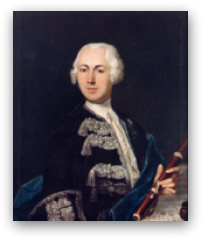
Johann Joachim Quantz
- Johann Joachim Quantz (1697–1773)
- Duetto I in G major from Sei Duetti a due flauti traversi, op. 2 (Berlin, 1759)
- Georg Philipp Telemann (1681–1767)
- Fantasie VII in D major from 12 Fantasias for transverse flute without bass (Hamburg, 1732/33)
- Georg Philipp Telemann (1681–1767)
- Fantasie IX in B minor from 12 Fantasias for violin without bass (Hamburg, 1735)
- CPE Bach (1714–1788)
- Duet in E minor for a flute and violin from Musikalishces Vielerley (Hamburg, 1748)
- Johann Joachim Quantz (1697–1773)
- Duetto IV in C major from Sei Duetti a due flauti traversi, op. 2 (Berlin, 1759)
- Georg Philipp Telemann (1681–1767)
- Fanastie XI in F major from 12 Fantasias for violin without bass (Hamburg, 1735)
- Georg Philipp Telemann (1681–1767)
- Fantasie VI in D minor from 12 Fantasias for transverse flute without bass (Hamburg, 1732/33)
- Johann Joachim Quantz (1697–1773)
- Duetto II in A minor from Sei Duetti a due flauti traversi, op. 2 (Berlin, 1759)
Duets and Trios by Quantz and Vella
Lunchtime at the Potter — Spring Early Music Festival
Greg Dikmans (baroque flute) and Lucinda Moon (baroque violin), with Alison Catanach (baroque flute) and Jennifer Brian (baroque flute).
Thursday 7 October 2010 — 1:00 pm
Ian Potter Museum of Art, University of Melbourne, Swanston St, Carlton
FREE EVENT
Part of the Spring Early Music Festival 2010
- Michel'Angelo Vella (1710–1792)
- Sonata VII in G major from 24 sonatas for 3 transverse flutes without bass
- Johann Joachim Quantz (1697–1773)
- Duetto III in B minor from Sei Duetti a due flauti traversi, op. 2 (Berlin, 1759)
- Michel'Angelo Vella (1710–1792)
- Sonata XI in B minor from 24 sonatas for 3 transverse flutes without bass
- Johann Joachim Quantz (1697–1773)
- Duetto V in D major from Sei Duetti a due flauti traversi, op. 2 (Berlin, 1759)
The Amorous Flute
Sunday 1 June 2008 — 2:00 pm
Potter Museum of Art — University of Melbourne, Swanston St., Parkville
Part of the Past Echoes Autumn Music Festival 2008
An intriguing and intimate musical journey through the solo repertoire for recorder and transverse flute, from the early 17th century to the late 18th century.
Greg Dikmans will play 6 different flutes and recorders and talk informally about the music, the composers and the instruments.
- Jacob van Eyck (c.1590–1657)
- Der Fluyten Lust-hof (Amsterdam, 1649)
-
- Variations on Doen Daphne d’over schoone maeght
- Variations on Engels Nachtegaeltje
- Anon
- The Bird Fancyer’s Delight (London, 1717)
-
- Tunes for the Woodlark and East India Nightingale
- François Couperin (1668-1733)
- Troisième livre de pièces de clavecin (Paris, 1722)
-
- Le rossignol en amour (Lentement et très tendrement)
- Johann Sebastian Bach (1685-1750)
- Flute Partita in A minor (BWV 1013)
-
- Sarabande
- Violin Partita III (BWV 1006)
-
- Bourée
- Gavotte en Rondeau
- Gigue
- Georg Philipp Telemann (1681-1767)
- Fantasie per il Traverso senza Basso (Hamburg, 1732/33)
-
- Fantasias
- Wolfgang Amadeus Mozart (1756-1791)
- The Magic Flute (premiered Vienna, 1791)
-
- Aria: Ach ich fühl’s, es ist verschwunden!
10th Blackwood River Chamber Festival
A moveable feast of chamber music in the heart of the South West of Australia
25-27 April 2008
Bridgetown, Western Australia
Greg Dikmans (flute), Lucinda Moon (violin), Laura Vaughan (bass viol) and Donald Nicolson (harpsichord) performed the following works in 5 concerts over the 3 days of the festival:
- Georg Philipp Telemann (1681-1767)
- ‘Paris’ Quartet No. 6 in E minor from Nouveaux quartors… (Paris, 1737/38)
- flute, violin, bass viol and basso continuo
- Georg Philipp Telemann (1681-1767)
- ‘Paris’ Quartet No. 2 in A minor from Nouveaux quartors… (Paris, 1737/38)
- flute, violin, bass viol and basso continuo
- Jean-Marie Leclair (1697-1764)
- Deuxième Récréation de Musique, op. 8 in G minor (Paris, 1737)
- flute, violin and basso continuo
- François Couperin (1668-1733)
- Huitième Concert dans la goût théâtral (Paris, 1724))
- flute, violin and basso continuo
- Marin Marais (1656-1728)
- Sonnerie de Ste. Genevieve du Mont de Paris (Paris, 1723)
- violin, bass viol and basso continuo
Parisian Soirée
Thursday 24 April 2008 — 6:30 pm
St Paul‘s Anglican Church — Latrobe Terrance, Geelong
Greg Dikmans (flute), Lucinda Moon (violin), Laura Vaughan (bass viol) and Donald Nicolson (harpsichord).
The music in this program displays the intimacy, delicacy, refinement and, above all, the douceur (‘sweetness’) of the chamber music written during the age of Louis XIV and Louis XV. This is the music of elegant conversation that, with the natural charm and sensitivity of its melodies and the classical beauty of its forms, delights the intellect and moves the heart.
François Couperin (harpsichord), Marin Marais (bass viol) and Jean-Marie Leclair (violin) were among the finest and most celebrated instrumentalists and composers working in France in the first half of the 18th century, performing in the private apartments of the king at Versailles and in the salons of the nobility in Paris.
Georg Philipp Telemann made a triumphant visit to Paris in 1737. He was at the height of his fame in Germany, but still lacked international recognition and to achieve that he had to succeed in Paris. For this visit he composed his justly famous ‘Paris Quartets’. He realised his music had to adapt itself to the taste of the Paris salons and concerts, as well as flatter the musicians who performed it and provide enough originality to keep the interest of the quickly satiated society. With the Nouveuax Quatuors Telemann not only fulfilled these aims, but also produced some of the finest chamber music written in Europe in the first half of the 18th century. The quartets combine elements of the French, Italian and German styles (the goûts-réünis) and many of the movements clearly point to the new galant style that was to be brought to its culmination in the works of Haydn and Mozart.
Program
- François Couperin (1668-1733)
- Huitième Concert dans la goût théâtral (Paris, 1724))
- flute, violin and basso continuo
- Marin Marais (1656-1728)
- Sonnerie de Ste. Genevieve du Mont de Paris (Paris, 1723)
- violin, bass viol and basso continuo
- Jean-Marie Leclair (1697-1764)
- Deuxième Récréation de Musique, op. 8 in G minor (Paris, 1737)
- flute, violin and basso continuo
- Georg Philipp Telemann (1681-1767)
- ‘Paris’ Quartet No. 6 in E minor from Nouveaux quartors… (Paris, 1737/38)
- flute, violin, bass viol and basso continuo
Nexus: The Songs of Solomon
A concert of Jewish Baroque Music
Sacred and secular vocal and instrumental works by Salamone Rossi and Louis Saladin
Sunday 17 October 2004 - 5.00pm
Temple Beth Israel — 76 Alma Rd, St Kilda
Elysium Ensemble
directed by Greg Dikmans
e21
directed by Stephen Grant
This special concert brings together the talents of two of Melbourne’s finest early music ensembles: the Elysium Ensemble and the vocal ensemble e21. Sacred vocal and secular instrumental works in the Italian style by Salamone Rossi—a Jewish composer active in Northern Italy at the time of Monteverdi—are contrasted with the Canticum Hebraicum by Louis Saladin—a festive divertissement commissioned by the Jewish community in Avignon to celebrate the circumcision of an infant boy—written in the French style of the court of Louis XIV in Versailles.
About the program
Against the background of a very conservative and restrictive theological tradition, the music in this concert may seem all the more surprising. The European Jewish communities of the Baroque period were restricted in their civil rights and living space, and were bound by religious law, yet still managed to absorb many influences of the dominant Gentile culture.
Salamone Rossi was the most gifted member of a clan of musicians working in and around Mantua in the early seventeenth century (his sister or wife, known as Madame Europa, sang the title role in Monteverdi’s opera Ariana). His secular music (madrigals, dances and sonatas in the new baroque style) was so highly regarded that the Gonzaga prince dispensed him from the obligation to wear the yellow Jewish star. Rossi, a violinist, also directed an orchestra of Jewish musicians that performed outside the ghetto and he is an important figure in the development of the trio sonata.
Rossi made a lasting contribution to Jewish liturgical music with the publication in 1622 of The Songs of Solomon, a series of psalms, hymns and prayers in Hebrew composed in the musical idiom of contemporary Italy. Even though they are cast in a more conservative late-Renaissance mould, they still met with resistance within the Jewish community, which clung to its tradition of unaccompanied monodic chant. It is in this form that some of Rossi’s melodies have survived and are still sung today.
Around 1670 a Jewish notable of one of the ‘Four Holy Communities’ of Avignon commissioned an otherwise unknown local composer, Louis Saladin, to set several religious texts to music for performance during the festivities associated with a circumcision ceremony (Brit Milah). Saladin used the texts to create a festive divertissement titled Canticum Hebraicum that combines airs (songs), choruses and courtly dances (bourrée, rigaudon and gavotte). It was performed several times and the melody of the final section survived to the end of the eighteenth century as a monodic traditional chant in the local collection of special prayers.
Canticum Hebraicum is composed in the French style popular at the court of Louis XIV in Versailles. Its subtitle ‘divertissement’ is a term that could apply to a simple pastorale or to entire months of celebration. Divertissements formed part of larger works, such as operas, or were commissioned for special events such as victories or royal births. The rhythms and galant character of the French courtly dances pervade the entire work, adding to its charm.
Joel Cohen, in his notes to the first recording of Canticum Hebraicum by the Boston Camerata (Musique Judeo-Baroque, Harmonia Mundi HMA 1901021), makes the following observation about the choice of musical style in this work: ‘Perhaps the proud parents were making efforts to please the Gentile neighbours invited to the ceremony: if the Hebrew text was unfamiliar, the music was certainly comprehensible and appealing. Surely an affront to the most intransigent members of both communities, this music seems to make a plea for harmony, friendship and understanding among neighbouring peoples. Ken ya’aseh adonay—may the Lord have it so!’